Photo and illustration elements: michaeljung, JadeThaiCatwalk, SDI Productions, nipastock, agung fatria, irem soyler, Rawf8, CHIH CHIEH HSIAO (iStock)
A quarter millennium of American competitive democracy—with searing flaws and rousing triumphs—is on the brink. The leaders of our federal government, across its branches, are undermining the American Promise at every chance. There are near-term victims and consequences, and there will be long-term damage.
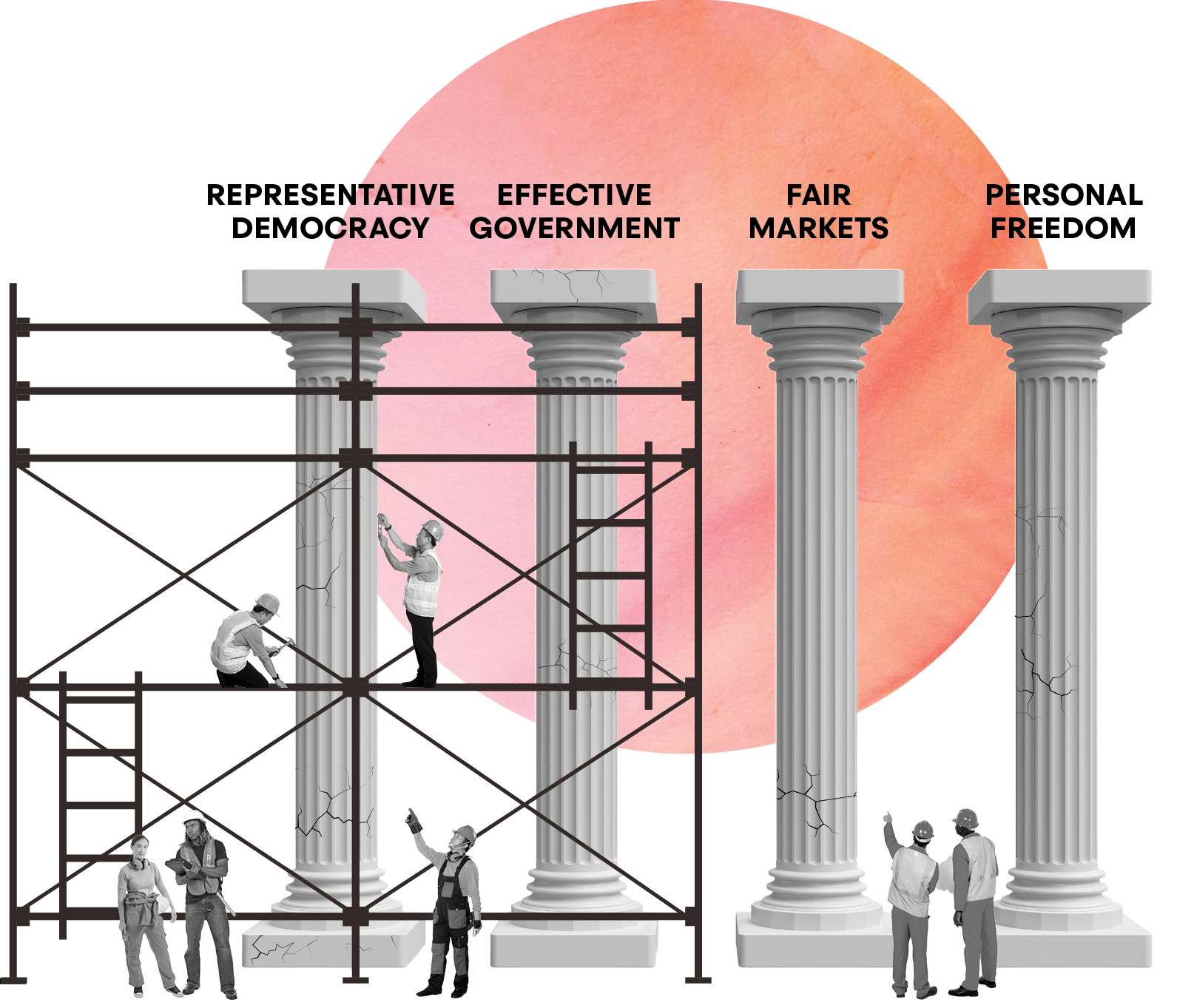
When we launched The States Forum in July, we also published an inaugural journal of ideas. Across a range of issues, contributors offered their reasoned arguments and hottest takes in response to a single prompt: how we can achieve the American Promise, that all people are created equal with the right to life, liberty, and happiness, through its four pillars—representative democracy, effective government, fair markets, and personal freedom.
Today, with this catalog of ideas we call The January Book, we want to preview a logical next step: concrete, actionable policy recommendations for states. We turned again to our burgeoning network, asking academics and practitioners who participated in our launch in Philadelphia in July to develop their ideas further into January Book proposals. The book is a platform for the ideas from people across The States Forum network, meant to catalyze urgent solutions to the pressing question of how to achieve the American Promise in states.
Think of this publication like a cookbook for policymakers—easy to read, with a clear list of ingredients and steps to follow (but zero scrolling through ads or whipped cream videos). We explore:
Building civil rights infrastructure in states, with Catherine Lhamon and Katy Joseph
Bringing more and cheaper energy online, with Jane Flegal
De-gouging the economy, with Rohit Chopra
Establishing a statewide service year program, with Paul Monteiro
Fixing government hiring, with Robert Gordon
Making housing more abundant, with Alex Brennan and Felicity Maxwell
Protecting university freedom of expression, with Sigal Ben-Porath
Are these ideas responsive to the times? Do the state case studies inspire you to think how policy might be changed in your state?
More Ideas from The January Book
Cheap and Abundant Electricity Is Good
State-Based Civil Rights Enforcement to Fill the Federal Vacuum