- Energy
Cheap and Abundant Electricity Is Good
By Jane Flegal, Executive Director of the Blue Horizons Foundation
The idea
Energy is the lifeblood of the modern economy. Electricity powers homes, factories, and our digital world, allowing us to enjoy comfortable lives in a competitive country. Growing demand for electricity is a good sign—for our economy, our national security, and the climate. Estimates suggest that half of new electricity demand in the next decade will come from electrification of transportation and manufacturing, not from data centers currently dominating headlines.1 The goal of American energy policy should be to have as much cheap and clean electricity as possible, with which our country will have the freedom to do whatever it chooses.
And yet we are not on track to deliver on this goal; new and long-standing policy challenges are choking new supply and increasing electricity prices, particularly in the nation’s highest price regions. The current Administration is aggressively restricting the cheapest forms of American energy in a time of growing demand, capriciously canceling permits for clean energy projects while propping up uneconomical technologies like coal. Convoluted permitting processes create delay and costs to new infrastructure, if it can even get approved. Interest groups have successfully advocated to include tangential social programs in electricity bills, asking ratepayers to cover the often substantial costs of achieving broader policy goals. Across the country, utilities are often not incentivized to deploy cost-effective or long-term solutions.
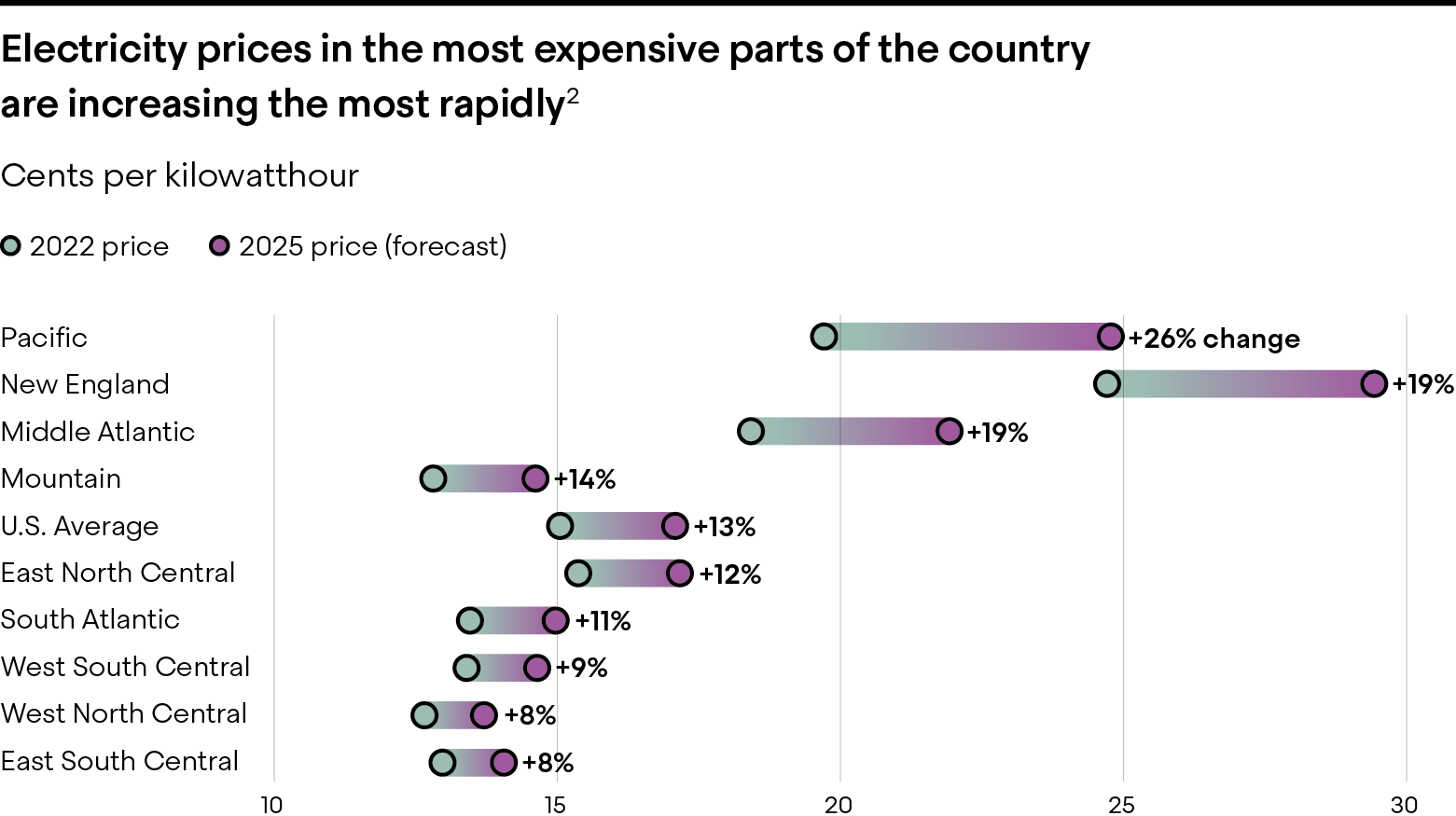
U.S. Energy Information Administration, May 14, 2025.
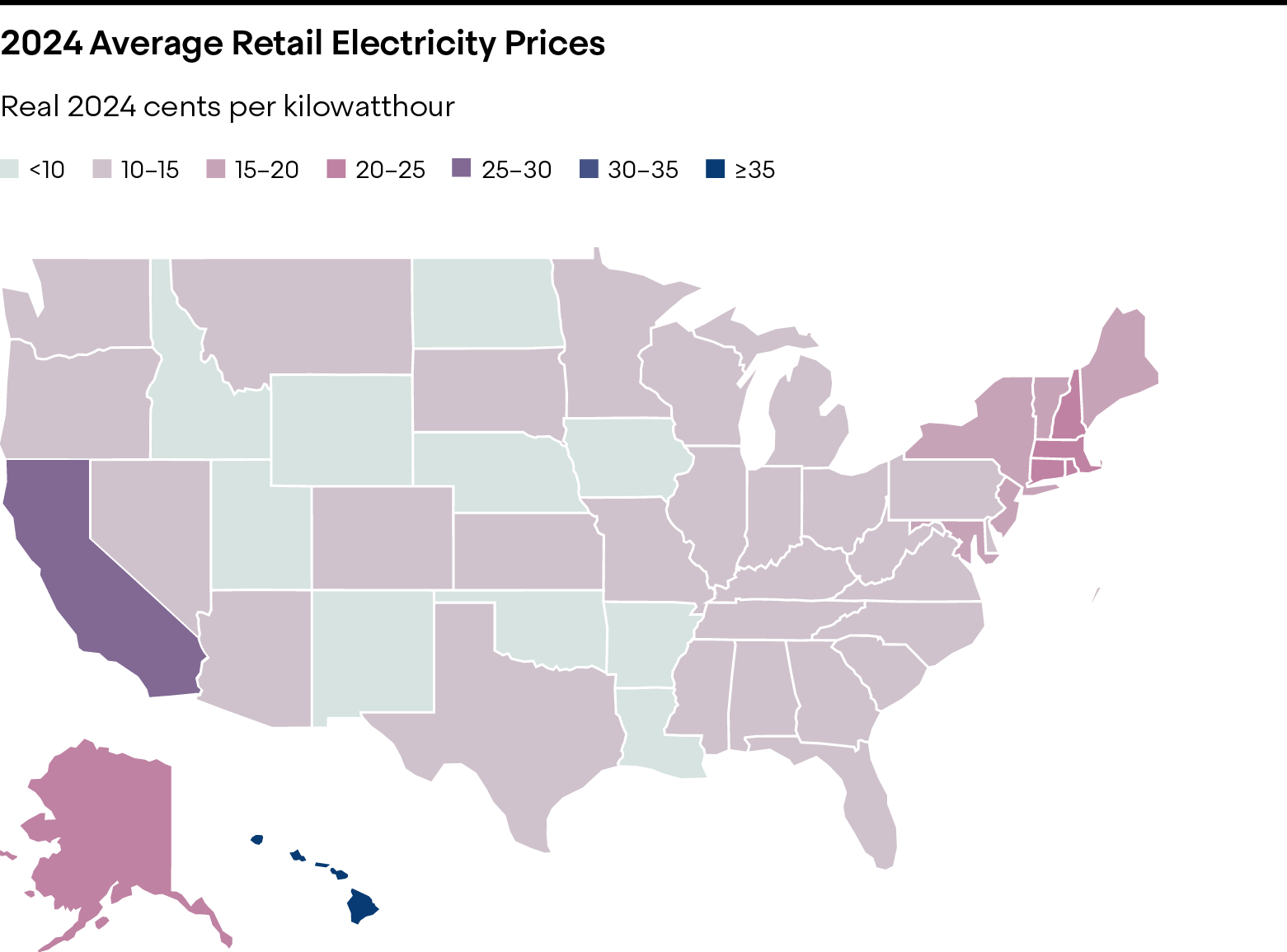
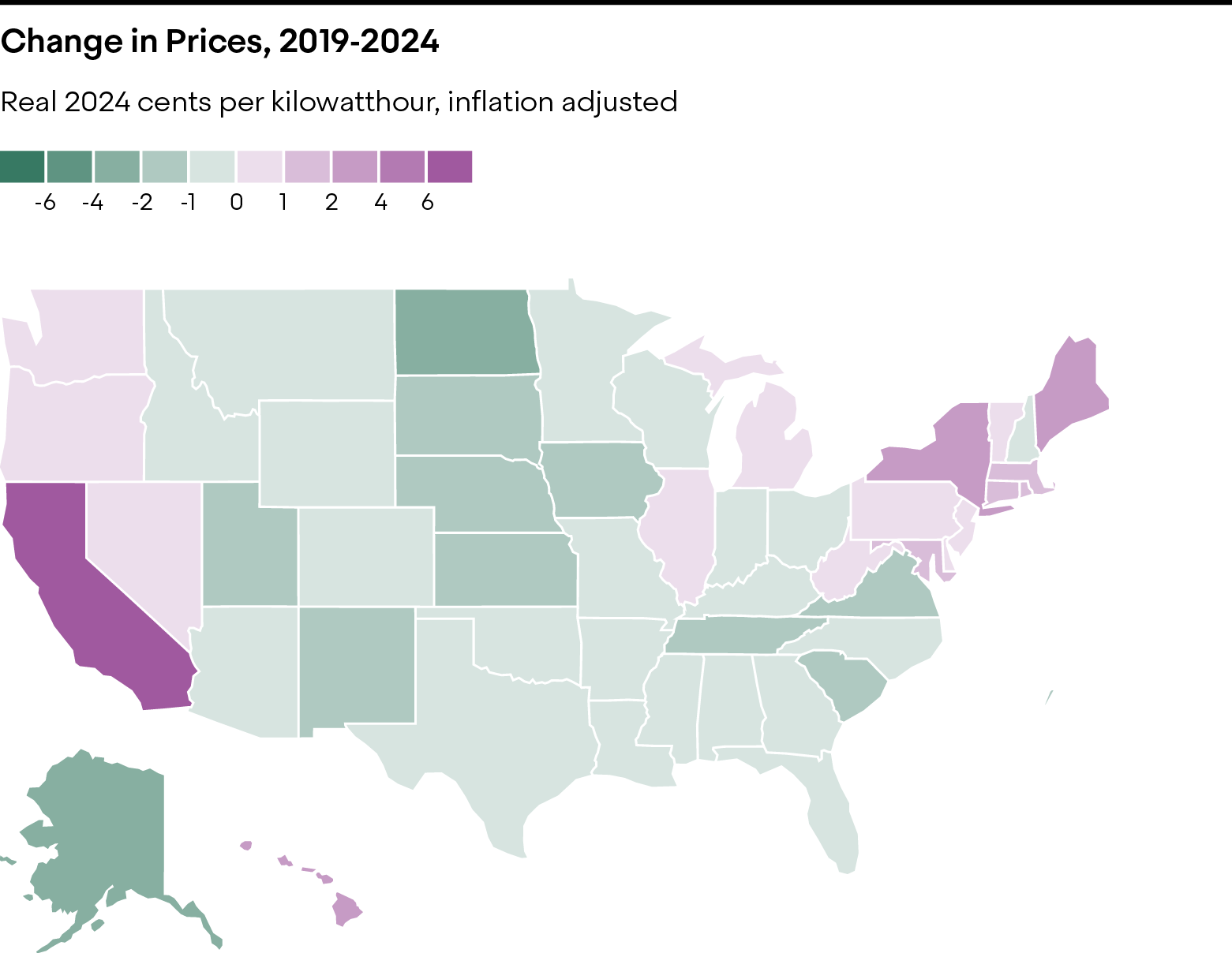
These circumstances have led to decades of underinvestment in modern electricity generation and the infrastructure to deliver it to customers, and, critically, resulted in higher bills. This can and must change. The crisis of electricity affordability presents an enormous opportunity to tackle the core issues at the heart of American energy strategy and to get public buy-in by delivering lower bills for ratepayers today.
Fortunately, policymakers are beginning to explain the stakes—and voters are beginning to take notice. In November, Georgia voters sent a crystal-clear message: electricity bills are too high. After two years of rate hikes totaling $500 annually for the average household—more than some people’s rent—Georgians voted to replace two incumbents on the Public Service Commission. Challenger Alicia Johnson’s victory speech captured the stakes: this victory is “for the single mother choosing between groceries and her power bill, the senior trying to keep the lights on.”3
Georgia isn’t alone. New Jersey’s governor-elect Mikie Sherrill campaigned on declaring a state of emergency over utility costs as households face $600 annual increases, and Virginia’s Abigail Spanberger won her governor’s race on promises to lower electricity prices after 13% rate hikes. While the precise amount and drivers of energy price spikes vary across the country, this election season has made it clear: the politics of electricity affordability have arrived.
In November 2025, The States Forum (TSF) convened policy thinkers, practitioners, utility reform advocates, clean energy experts, and state lawmakers to grapple with the causes of rising electricity rates and identify effective state policy solutions to meaningfully reduce energy costs for American families.
At this policy accelerator, participants identified a wide range of policy opportunities, ranging from minor regulatory reforms to a radical re-thinking of how the grid is planned and paid for. Some of the most concrete and near-term opportunities directly address underlying cost drivers common across many states: rapidly growing demand, constrained supply, and overdue grid investments.
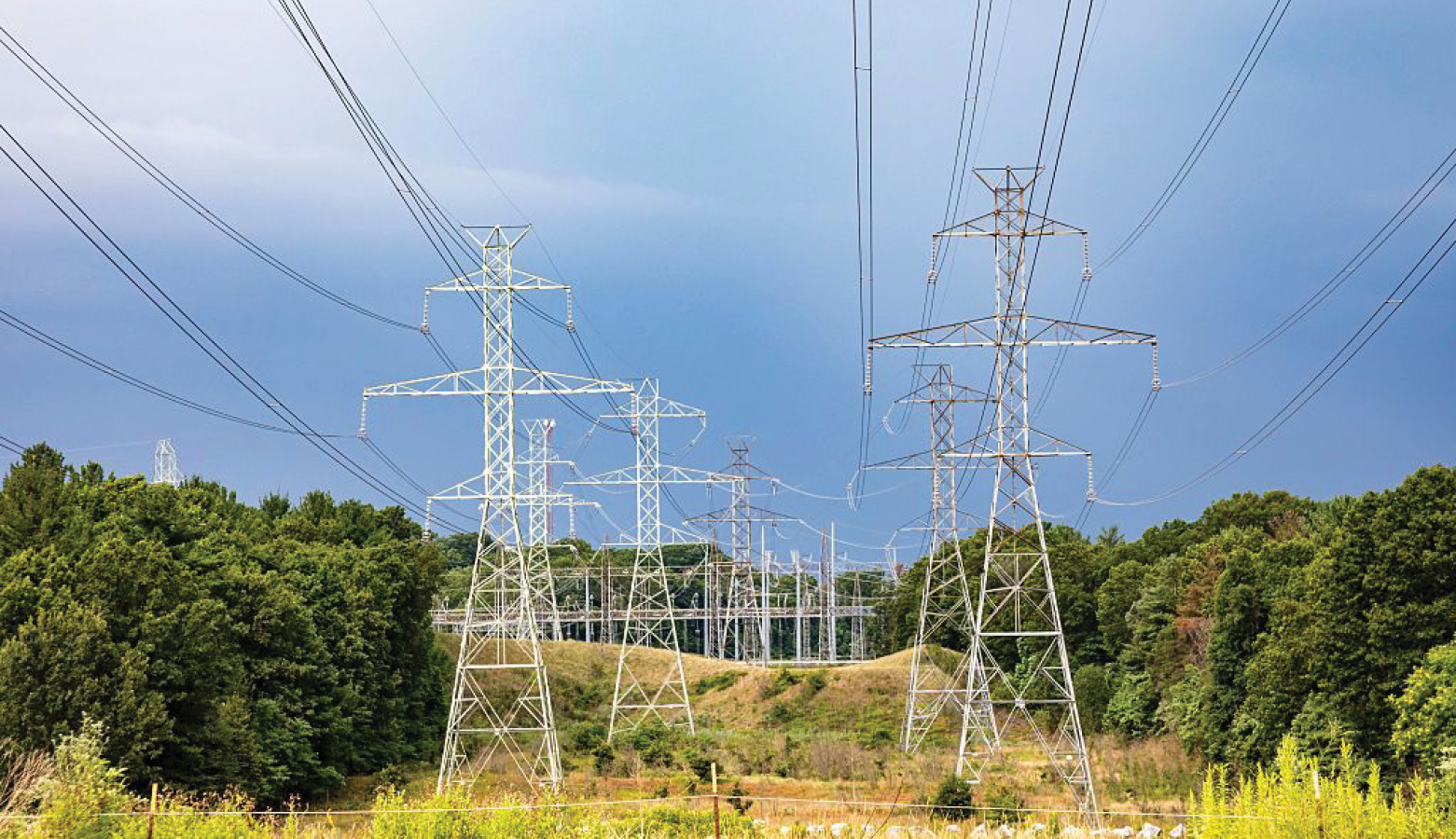
Bridgman, MI, 2025. (Photo by Jim West/UCG/Universal Images Group via Getty Images)
Ultimately, participants developed four remedies that target the same disease: our inability to muster public support to rapidly and efficiently build the infrastructure our economy requires, starting with the electricity grid itself. Electricity demand growth, if it can be supplied affordably, is good: it is good for our economy, our national security, and also the climate, because affordable and abundant electricity is a prerequisite for electrifying the economy. The solutions we offer to the immediate problem of electricity price increases must start from the posture that growing demand for electricity is something we should encourage, not a trend we should wish to change.
Case studies
New Jersey
A promise to cut red tape on new supply
Incoming New Jersey Governor Mikie Sherrill promised to declare a State of Emergency on Utility Costs and freeze electricity rates, cut red tape for clean energy projects, increase oversight of the state’s for-profit utilities, and bring legal accountability to the regional grid operator. The lynchpin of her plan is to “massively increase New Jersey’s power generation to build an energy arsenal,” thereby reducing energy costs through an abundance of new supply.4 Her policy platform for the November 2025 elections came in response to anticipated electricity price hikes of $220 for each New Jersey household from Congress canceling clean energy tax credits and another $400 caused by the grid operator’s poor management and delays connecting new clean energy projects.
Virginia
Making data centers pay their fair share
In 2023, the Mid-Atlantic grid operator PJM approved a $5 billion transmission project designed to support data center growth in Maryland and Virginia.5 Despite the project’s narrow benefit, cost allocation rules allowed Dominion Energy to pass more than half of the expense to residential ratepayers.6 State regulators have since created a new electricity rate class that requires large load users to sign 14-year contracts, locking them into projected minimum demand charges—meant to increase the amount and likelihood that large users pay for grid infrastructure and reduce the burden on existing electricity customers.7 In addition to this new rate class, regulators also approved a residential rate increase, but at a lower rate than Dominion Energy had requested.
Texas
A Texas-sized transmission system
This year marked a major milestone for the Texas grid: approval of the largest transmission lines ever conceived in the state, connecting oil and wind-rich West Texas to major demand centers in the East. State regulators say these strategic investments will save hundreds of millions of dollars within the decade by avoiding costly yet inefficient upgrades to the existing grid and moving electricity more efficiently—all while accommodating doubled electricity demand. The December 2025 announcement was the culmination of years of policy collaboration across the legislature, governor’s mansion, state regulator, and grid operator.8
Iterations of the idea
When it comes to electricity policy—and especially electricity rates—states have significant authority. While the federal government regulates interstate transmission, wholesale electricity trade, and some environmental pollutants from power plants, the following areas of policy are left wholly to the states (and occasionally local governments): rate setting, electricity distribution, and facility siting. States may also enact any number of other policies that impact electricity infrastructure and pricing, such as tax policy, natural hazard mitigation, and environmental policy.
This means state policymakers have an opportunity to pursue several strategies for addressing electricity costs, including increases caused by growing demand, constrained supply, and the need for new grid investments.
The first is to reduce barriers to new supply. State siting and permitting policies—those dictating where and under what conditions a new power plant may be built—often have prolific veto points, indefinite timelines, inscrutable application steps, and unproductive (and often undemocratic) mechanisms and processes for public input. Policymakers can reform, streamline, and enhance these policies for all types of electricity generating technologies so new supply can be built on reasonable timelines.9 This includes adopting statewide siting rules for large energy projects, consolidating state permit processes, and digitizing the permitting process itself, unshackling state permitting experts from the tyranny of paper forms passed through interdepartmental mail.10 Distributed energy resources, including rooftop solar, cost seven times more in the United States than in Australia or Germany; instant, digital permitting can drastically lower these costs.11
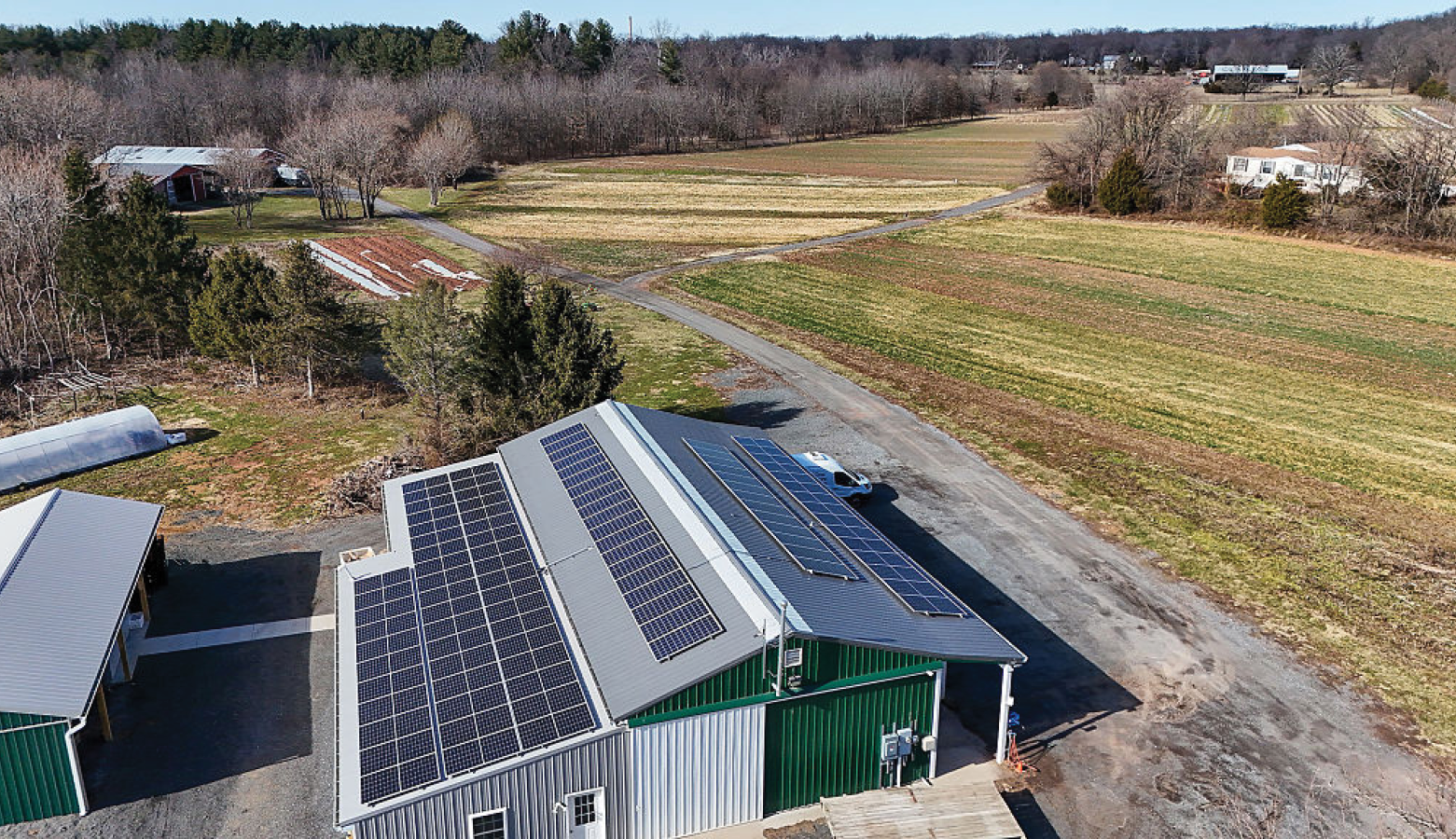
Dickerson, MD, 2025. (Photo by Kevin Richardson/Baltimore Sun/Tribune News Service via Getty Images)
The second is to make large energy users pay their fair share of grid costs. Load growth does not inherently increase prices; careful grid planning and assignment of grid costs, backed by strong regulatory scrutiny, can enable beneficial load growth while keeping prices low. Regulators and lawmakers can create rate classes for large energy users that better allocate costs, require upfront payments, and make sure infrastructure costs get paid, even if data centers or factories never get built.12 13
PowerLines, April 2025.
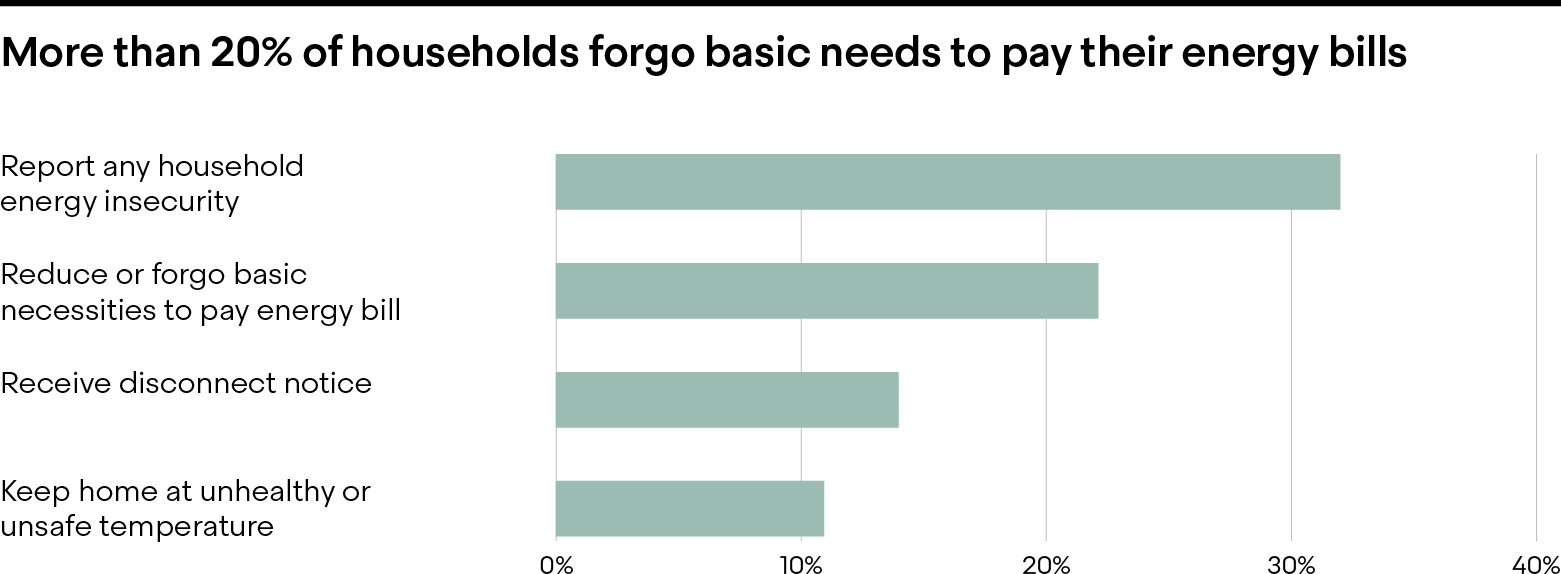
The third is to remove unnecessary costs from electricity bills and offer immediate relief to customers. Various fees have been added to electricity bills over the years to raise money for energy efficiency, low-income assistance, or covering unpaid bills, among other purposes. These charges range from a couple percent up to 20 percent of a typical residential electricity bill, with the remainder covering the actual cost of electricity and related infrastructure.14 In addition, costs of responding to or preparing for natural disasters is a rapidly growing portion of bills, particularly in Western states prone to wildfire, even though there’s no particular reason these costs are not considered holistically. States can take a fresh look at what they are charging customers through fees and utility costs, remove costs of outdated or ineffective programs, and find alternative sources of funding.15 In addition, states can take actions to protect customers from unavoidable increases in electricity prices, including enacting moratoria on disconnections (preventing utilities from shutting off power to customers who are behind on their bills), and encouraging customers to enroll in demand response programs that can sometimes save them money.
The fourth strategy is to invest strategically in major grid infrastructure upgrades. Utilities, driven by their investment-based profit model, prefer making inefficient, incremental grid upgrades rather than strategic, cost-effective investments that improve the efficiency of the grid and better accommodate future load growth.16 Unsurprisingly, studies show time and again that strategic investments in large transmission system upgrades can yield substantial cost savings over the long term by avoiding patchwork fixes and moving cheap electricity over longer distances. Regulators and lawmakers can increase oversight of the transmission planning process, require utilities to plan for the long term using the best available grid technologies, coordinate with neighboring states, and better engage with regional planning processes.17
Why act?
Energy politics are fractured. Debates over affordability, reliability, and decarbonization typically break along partisan lines, making it difficult to build coalitions that can advance infrastructure policy. But rising electricity prices are too consequential to ignore, and the economics of energy are shifting in ways that create new opportunities for alignment.
Voters have consistently identified rising energy prices as an issue of concern, with 25 percent indicating that they have struggled to pay their electricity bill at least once in the past year.18 So it is no surprise that rising energy prices and energy affordability has proven a salient issue in recent elections. Candidates and lawmakers have broken through to voters on this issue, and their commitments may prove instructive as others look to engage on this issue. In her election night victory speech, Virginia Governor-elect Abigail Spanberger said, “We’re going to produce more energy and we’re going to lower energy costs … we are going to produce more energy here in Virginia and make sure that data centers pay their fair share.”19
In many markets, new clean energy projects—particularly utility-scale solar and wind—now offer the lowest cost for new generation. When clean energy competes with incumbent fossil energy, ratepayers win. This economic reality is creating coalitions that would have been unlikely even five years ago. When building more supply means lower costs, strange bedfellows emerge.
Reducing barriers to supply will unleash affordable, reliable energy, driving investment in areas where it is available and the economic growth that goes with it. These new investments benefit communities, ratepayers, and industry players including local Chambers of Commerce, manufacturing and heavy industry, large energy users, and the labor unions necessary to build and maintain this infrastructure.
Smarter electricity grid investments lower prices while accommodating new demand. Sometimes you have to spend money to save money. Using advanced grid technologies, improving the grid planning process, and aligning utility incentives help get more out of the infrastructure we have and make sure new investments serve customers. And this means ensuring those benefitting from new investments pay their fair share.
End Notes
- King, Ben, et al. Taking Stock 2025: US Energy and Emissions Outlook. Rhodium Group, 10 Sept. 2025, p. 15, https://rhg.com/research/taking-stock-2025/
- U.S. Energy Information Administration. “U.S. Electricity Prices Continue Steady Increase.” Today in Energy, 14 May 2025, www.eia.gov/todayinenergy/detail.php?id=65284
- Rocha, Alander. “Democrat Alicia Johnson Appears to Defeat Longtime Georgia Utility Regulator.” Georgia Recorder, 4 Nov. 2025, https://georgiarecorder.com/2025/11/04/democrat-alicia-johnson-appears-to-defeat-longtime-georgia-utility-regulator/
- Sherrill, Mikie. State of Emergency on Utility Costs. Mikie Sherrill for Governor, 2025, www.mikiesherrill.com/utilities.pdf
- Utility Dive, “PJM board approves $5B in transmission projects to be built by Dominion, FirstEnergy, others,” December 12, 2023. https://www.utilitydive.com/news/pjm-board-transmission-rtep-maryland-dominion-firstenergy/702263/
- Eliza Martin & Ari Peskoe, “Extracting Profits from the Public: How Utility Ratepayers Are Paying for Big Tech’s Power,” Harvard Law School Environmental & Energy Law Program, March 2025. https://eelp.law.harvard.edu
- Skidmore, Zachary. “Virginia Regulators Approve New Rate Class for Data Centers and Other Large Loads.” Data Center Dynamics, 27 Nov. 2025, www.datacenterdynamics.com/en/news/virginia-regulators-approve-new-rate-class-for-data-centers-and-other-large-loads/
- Electric Reliability Council of Texas. Trending Topics: ERCOT Transmission Planning — 345‑kV and TX 765‑kV Strategic Transmission Expansion Plan (STEP). 9 Dec. 2025, https://www.ercot.com/files/docs/2025/01/28/ERCOT_Trending_Topic_345-kV_vs_765-kV_Transmission.pdf
- National Caucus of Environmental Legislators. Clean Energy Siting and Permitting Fact Sheet. Oct. 2024, www.ncelenviro.org/app/uploads/2024/10/CE-Clean-Energy-Siting-and-Permitting-Fact-Sheet.pdf
- Siting Solutions Project. Renewable Energy Siting Policy Field Guide. Dec. 2025, https://sitingsolutions.com/wp-content/uploads/2025/12/Renewable-Energy-Siting-Policy-Field-Guide.pdf
- Permit Power, “As Cheap as Our Peers – How cutting red tape can lower the cost of rooftop solar and offset rising utility bills,” October 2025. https://permitpower.org/wp-content/uploads/sites/35/2025/10/Cheap-as-our-peers-1.pdf
- Data Center Dynamics, “Pennsylvania House proposes creation of new rate class for data centers,” October 24, 2025. https://www.datacenterdynamics.com/en/news/pe/
- Deloitte, “Funding the Growth in the US Power Sector,” February 26, 2025. https://www.deloitte.com/us/en/insights/industry/power-and-utilities/funding-growth-in-us-power-sector.html
- Moritz, John. “What to Know About the Public Benefits Charge on Your Electric Bill.” CT Mirror, 19 May 2025, www.ctmirror.org/2025/05/19/ct-public-benefits-charge/
- California Public Advocates Office. Addressing Underperforming Ratepayer‑Funded Programs. 12 Mar. 2025, https://www.publicadvocates.cpuc.ca.gov/-/media/cal-advocates-website/files/press-room/reports-and-analyses/250312-public-advocates-office-addressing-underperforming-ratepayer-funded-programs.pdf
- Wayner, Claire, Kaja Rebane, and Chaz Teplin. Mind the Regulatory Gap: How to Enhance Local Transmission Oversight. Rocky Mountain Institute, Nov. 2024, www.rmi.org/wp-content/uploads/dlm_uploads/2024/11/rmi_mind_the_regulatory_gap.pdf
- Patel, Anjali, David Grossman, Anna Dixon, and Allison Fabrizio. State Policies to Advance Transmission Modernization and Expansion. Americans for a Clean Energy Grid, Sept. 2024, www.cleanenergygrid.org/wp-content/uploads/2024/09/ACEG_State-Policies-to-Advance-Transmission.pdf
- Searchlight Institute, “The First Rule About Solving Climate Change,” 2025. https://www.searchlightinstitute.org/research/the-first-rule-about-solving-climate-change/
- Virginia Mercury, “With Democrats in charge, Spanberger targets lower energy bills — and higher costs for data centers,” November 7, 2025. https://virginiamercury.com/2025/11/07/energy-policy-tees-up-to-take-focus-in-new-administration/